
Communities Fund has provided £779 of match funding
Your donation unlocks match funding
Boost your impact
Your donation unlocks match funding
To restore and protect important habitats that support vulnerable species on Ashdown Forest, preserving them for the future.
Donations up to £250 will be matched by The Aviva Foundation.
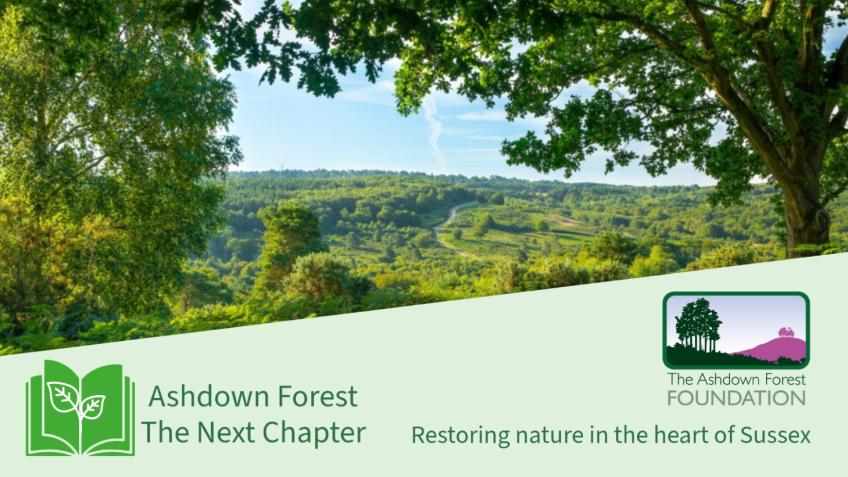
Rarer than tropical rainforest, lowland heathland is important ecologically for many species. Ashdown Forest’s lowland heathland and ancient woodland is a magical place that inspired the birth of Winnie-the-Pooh and his friends and in his 100th birthday year, we’re asking for your help to protect it for the future.
The Challenge
Over the last century, many heathland habitats in the UK have been lost through encroachment, over-exploitation and climate change. Facing exactly the same challenges, Ashdown Forest is an important habitat oasis in a very busy South East corner of the UK.
Across 10 square miles, the Forest’s small team of conservators work hard to manage habitats and run projects to support vulnerable species such as the Nightjar, Dartford Warbler, Silver Studded Blue butterfly, the Green Tiger Beetle, the Hazel Dormouse and, as recently covered by BBC’s Springwatch (to much excitement from Chris Packham), the Honey-buzzard.
All of these projects demand money and resources and public funding cannot be guaranteed which is why The Ashdown Forest Foundation provides funding to help deliver these important habitat management and species projects.
The Next Chapter
Inspired by the 100th birthday of one of our most favourite and rare species - Winnie-the-Pooh - and his birthday celebrations on the Forest, we’re looking ahead to the next 100 years and how we can protect this special place. Money raised from this crowdfunder will go into our 100 Year Legacy Fund to be used to protect and conserve the Forest and support habitat and species projects for species like these.
Dartford Warbler

The Dartford warbler experienced a dramatic population crash in the 1960s, with numbers plummeting to just 10-11 pairs remaining in the UK. It still remains classified as an Amber List species in the UK.
The Dartford Warbler is one of Ashdown Forest’s most iconic residents; a small, long-tailed bird often glimpsed as a quick flicker between gorse bushes. In spring, you’re most likely to spot one perched on top of a gorse stem, singing its warbling song across the heathland.
This species depends on a healthy heathland ecosystem made up of a variety of species of plants which provide both food and shelter during harsh winters.
How your support helps Dartford Warbler populations
You’ll be helping our heathland conservation efforts, providing much-needed funds to help manage the heathlands through cutting, scrub removal, and occasional controlled burning. This activity supports healthy growth of heather and gorse, creating the ideal conditions for the Dartford warbler to thrive.
Hazel dormouse
The hazel dormouse is a tiny, golden-brown woodland mammal, known for its large dark eyes, delicate whiskers and hidden life among the branches. Active mainly at night, it feeds on flowers, fruits, nuts and insects. Dormice help the Forest by spreading pollen and seeds as they move through trees.
Sadly, dormouse numbers are in serious decline. The loss of ancient woodland and hedgerows is thought to be a major cause, as dormice are reluctant to cross wide, open spaces, leading to isolated populations with reduced genetic diversity and a greater risk of extinction.
How your support helps dormice
Our goal is to restore a sustainable and resilient population of Hazel dormice on Ashdown Forest. Your donation will help us to manage overgrown scrub and remove invasive plant species that take over dormouse habitats, helping these little creatures to find a place to make their nests and feed.
Nightjar
The nightjar is a magical summer visitor on Ashdown Forest, arriving from Africa in April and May to breed on open heathland. Active at dusk and dawn, it hunts moths and other flying insects on long, pointed wings, its twisting flight and soft wingbeats giving it an almost bat-like appearance.
By day, however, it disappears completely. Its grey-brown plumage provides exceptional camouflage, perfectly matched to the textures and tones of the heathland. Often the first sign of its presence is the male’s distinctive “churring” song that can be heard across the heathland on summer evenings. With its strange voice and silent hunting flight, the nightjar has long been associated with mystery and folklore, sometimes linked to spirits, ghosts or otherworldly beings.
How you can help nightjars
Nightjar populations in the UK declined by 51% during the 20th century due to habitat loss, but numbers on Ashdown Forest are now growing. Your support can help us to restore more of their habitat on the Forest and bring them back in ever greater numbers.
Adder
Adders are experiencing dramatic declines, with surveys showing 90% of adder populations decreasing. Research suggests small populations could face extinction as early as 2032 if current trends continue, and they are protected by UK wildlife legislation.
Although they are the UK’s only venomous snake, they are shy and prefer to slip quietly away. They play an important role in the ecosystem by controlling rodent populations.
Unlike most snakes which lay eggs, adders are ovoviviparous, meaning their young develop inside the mother before birth. This method is suited to cold environments, as the mother can thermoregulate by basking in the sun, which keeps the eggs warmer than simply being on the ground.
How your support helps adders
Adders thrive in heathland and woodland habitats and your donations can help us protect adder populations by helping the teams maintain ideal habitats on the Forest.
Silver-studded blue
The Silver-studded Blue has undergone a major decline in the UK due to habitat destruction and lack of grazing. Found in sparser, low-growing heathland habitats, the butterfly’s range is extremely restricted, with many individuals flying no further than 50m from their hatching site during their lives.
This gorgeous electric-blue butterfly is one of the heathland’s special summer sights, flying from June to late August over open patches of heather. The Silver-studded Blue is named after the tiny silvery-blue reflective “studs” on the underside of its wings.
Its caterpillars feed on plants such as bell heather, cross-leaved heather and gorse, and share a fascinating partnership with black ants. The caterpillars produce a sugary liquid from a special gland, which the ants feed on. In return, the ants protect them from predators, escorting the caterpillars between their underground nests and feeding plants.
Support a butterfly superhighway!
At Ashdown Forest, your donations support conservation grazing, helping to create a “superhighway for butterflies” to allow populations of this beautiful creature to meet and mingle for the first time. As a result the butterfly population on the Forest is growing and becoming more resilient, with numbers increasing every year.
Green tiger beetle
The green tiger beetle can be seen throughout Ashdown Forest darting across sandy paths and open ground in the spring and summer sunshine. Metallic green with purple legs, it’s hard to miss once you spot its distinct flash of colour. This common but eye-catching beetle is an agile hunter, chasing down spiders, caterpillars and ants with impressive bursts of speed, and is considered one of the UK’s fastest insects.
Green tiger beetles can move at a speed of 60cm per second, which, if scaled to human size, would be equivalent to you running at over 300 mph!
Green Tiger Beetles depend on areas of bare ground with little vegetation. Their main conservation threat is loss of this bare ground habitat, as they rely on sun-warmed ground to remain agile and fast.
How you can support one of the UK’s fastest insects
Green Tiger Beetles serve as important indicator species for biodiversity. As umbrella species, their conservation indirectly protects multiple other species including rare heathland specialists like Silver-studded Blue butterflies and Dartford warblers. Your support means that we can monitor the health of this species on Ashdown Forest and help to maintain its specialised habitat.
How your donations will support vulnerable species
The funds we raise will form part of our Ashdown Forest Hundred Year Legacy Fund, and will be spent on projects that conserve and protect Ashdown Forest's unique landscape and diverse species, such as:
Thank You!
Your donations are helping us to write the next chapter of Ashdown Forest's story, and helping to ensure that the whole cast of characters come along for the tale.
Thanks to the Aviva Foundation, every donation you make up to £250 will be matched, so please donate today and make double the impact.
Communities Fund has provided £779 of match funding

Communities Fund Employee Giving has provided £80 of match funding
Funding method
Keep what you raise – this project will receive all pledges made by 7th October 2026 at 10:28am