Always on
This project successfully funded on 16th June 2026, you can still support them with a donation.
Crowdfunder is secure
Your payment details are protected
This project successfully funded on 16th June 2026, you can still support them with a donation.
We are raising funds to help young people turn surplus food into meals while building skills for a more sustainable future.
Would you go into a supermarket, buy three shopping bags of food, and then immediately throw one away? Statistically, that’s what’s happening to our food today. One third of all the food that is produced for human consumption is wasted.
Who are we, and what is our project about?
Daisies Kids Club is a Hackney-based charity supporting children and young people facing disadvantage, including poverty, disability and social exclusion. We create inclusive spaces where every child is supported to grow, build confidence and reach their potential.
This project responds to a clear and urgent issue: over 3 million tonnes of edible food is wasted in the UK each year, while almost 2 million children live in households unable to afford healthy food. Young people in our community are deeply aware of this contradiction.
They've shared personal experiences of going to bed hungry, not having access to nutritious meals, and witnessing food being discarded while many go without. From Waste to Taste was conceived in response to their call for action. It is designed to address both aspects of this problem: reducing food waste and providing nutritious meals to those in need.
Through this project, they will take action by collecting surplus food, transforming it into nutritious meals, and redistributing it to families in need, while learning skills and contributing to climate action.
How the project works
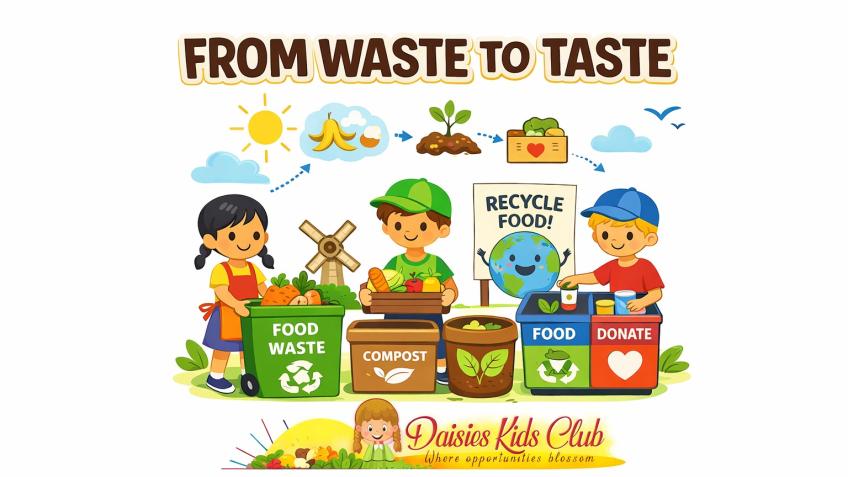
A simple cycle of impact:

From Waste to Taste is a youth-led initiative that aims to transform surplus food into delicious, nutritious meals while also promoting environmental sustainability through a container recycling program.
Here's how we plan to achieve this:
Food Collection and Preparation:
Our project will mobilise and empower young volunteers to actively participate in the collection of surplus food from local sources, with collections taking place twice a week to ensure a consistent and reliable supply. They will not only collect surplus food but also take charge of the creative and resourceful process of repurposing it into delicious, balanced, and ready-to-eat meals. Working collaboratively in a dedicated community kitchen, outfitted with all the necessary cooking appliances, they will transform what would have been wasted food into nourishing dishes that will directly benefit individuals and families facing food insecurity in our community.
Eco-Friendly Packaging:
Meals will be packaged using eco-friendly, reusable, or recyclable food containers and utensils, significantly reducing single-use plastic waste and embedding sustainable practices into every stage of the project.
Container Recycling Program:
We will establish recycling stations at distribution points, including a dedicated drop-off station at Hill Medical Centre, where recipients can return used containers in exchange for reward points. This will encourage consistent reuse, reduce waste, and actively engage the community in sustainable behaviour.
Meal Distribution:
We will collaborate with community centres, shelters, schools, and organisations serving food-insecure individuals to distribute the meals effectively and reach those most in need across the local area.
Eco-Kids Program:
The Eco-Kids Program is a creative and engaging initiative within the project aimed at reducing food waste and fostering environmental awareness among children. Through monthly workshops, children will participate in fun and educational hands-on activities, such as Rescue the Veggies smoothie making and creating art from food items that would otherwise be discarded. The program not only educates children about the importance of reducing food waste but also empowers them to become advocates for positive change within their families and communities, creating a long-lasting impact from a young age.
Aims: The primary objectives are as follows:
1. Reduce food waste by repurposing surplus food items into nutritious meals.
2. Address food insecurity by providing balanced meals to individuals and families in need.
3. Promote environmental sustainability through eco-friendly packaging and a container recycling program.
4. Empower young people with valuable life skills, foster community involvement, and instill a sense of responsibility for the environment.
Climate Action
Food waste is one of the most overlooked drivers of climate change. When food is discarded, all the resources used to produce it—water, energy and transport—are wasted, and when it reaches landfill, it releases methane, a greenhouse gas far more damaging than carbon dioxide.
By rescuing surplus food, this project directly prevents these emissions. We aim to save at least 5 tonnes of edible food, preventing an estimated 12.5 tonnes of CO₂ equivalent emissions. However, the long-term climate impact goes far beyond this.
A key strength of this project is educating young people at a critical stage where habits are still forming. Through hands-on involvement, they will understand the environmental impact of food waste and learn practical ways to reduce it in their daily lives. This early intervention is powerful—when young people change their behaviour, they influence their families and social circles, multiplying the impact across the community.
We expect over 90% of participants to adopt more sustainable habits, such as reducing food waste, reusing resources and making more conscious food choices. By embedding these behaviours early, the project creates lasting change, equipping a generation to actively prevent environmental harm and contribute to a more sustainable future.
Financial Wellbeing
This project will also strengthen financial resilience within the community. By teaching young people how to prepare nutritious meals from low-cost, surplus ingredients, they will develop practical skills that reduce reliance on expensive takeaway foods and help stretch household budgets. Families receiving meals will experience immediate financial relief, particularly during a time of rising living costs. In addition, young people will gain a better understanding of the value of food, reducing waste at home and encouraging more cost-effective habits. Over time, these changes will lead to more sustainable spending, improved budgeting around food, and greater financial stability for both participants and their families.
“We don’t want to just see the problem, we want to be part of the solution.” Young participant
“This project gives young people purpose while helping families who are struggling.” Parent
Monitoring:
The success will be continuously monitored through several key metrics, including: The amount of surplus food collected and meals prepared. The number of individuals and families served. The quantity of containers recycled and points earned. Community feedback and engagement. Environmental impact, including reductions in waste and the promotion of sustainable practices. Regular surveys and feedback sessions with recipients and volunteers will provide valuable insights for program improvement. Additionally, we will establish partnerships with local recycling facilities to ensure the proper disposal and recycling of collected containers.
How we’ll spend the money
Food collection and transport
Kitchen equipment and supplies
Eco-friendly packaging and recycling systems
Training and workshop materials
Staff and volunteer support
How you can help
1. Donate
Help us turn waste into meals and opportunity.
2. Share
Spread the word and help us grow our impact.

Communities Fund provided £25,000 of match funding

Communities Fund Employee Giving provided £5,760 of match funding
Funding method
Keep what you raise – this project will receive all pledges made